The AI Auditor: How Machine Learning is Transforming GST Reconciliation
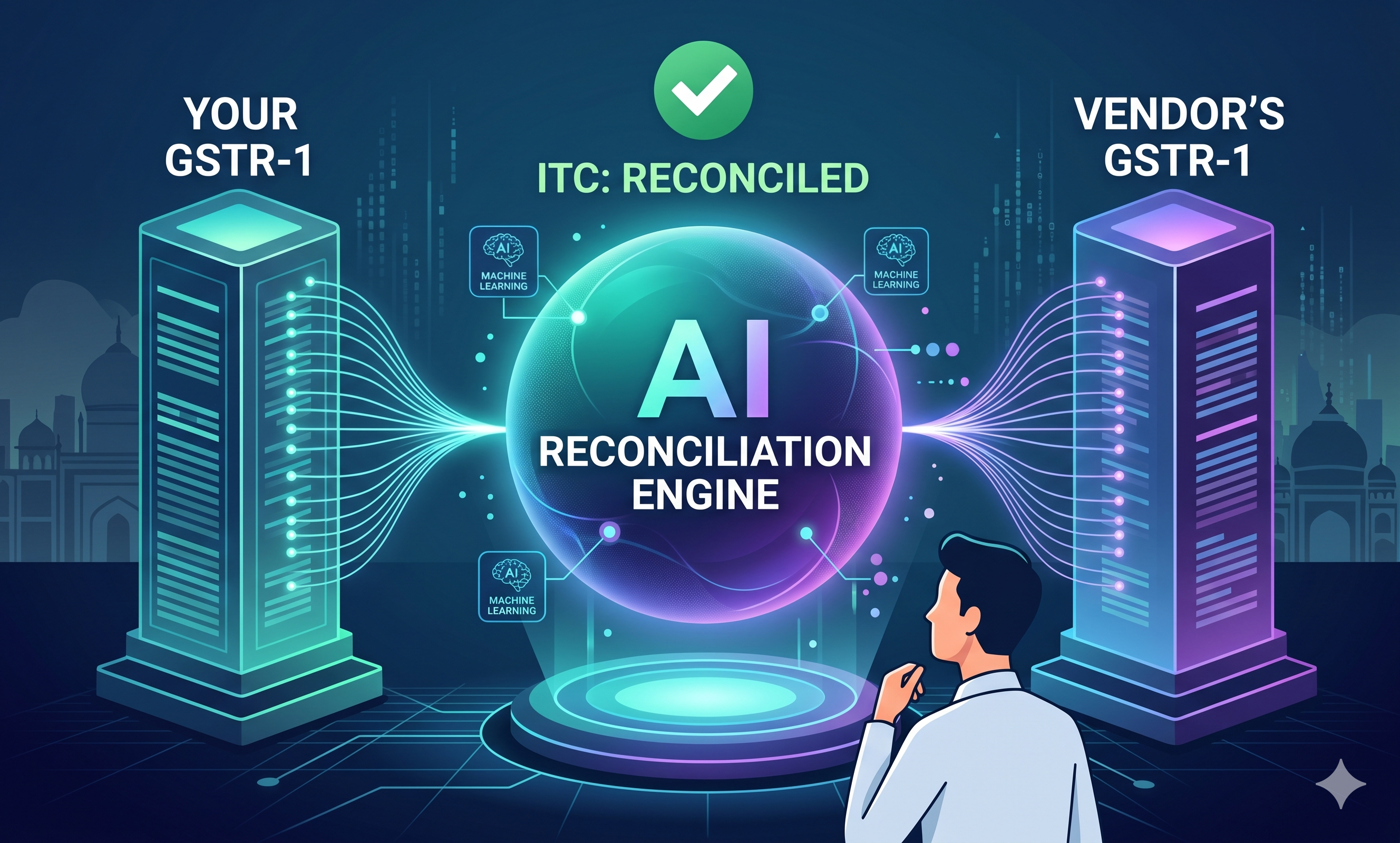
In 2026, the days of manual, Excel-based GST reconciliation are officially over. The GST Network (GSTN) has fully integrated advanced Artificial Intelligence (AI) and Machine Learning (ML) algorithms for tax scrutiny. This change has profoundly altered how businesses must handle their input tax credit (ITC) reconciliation, making pre-filing accuracy the only viable compliance strategy.
The AI-driven system doesn't just look for glaring discrepancies; it identifies subtle patterns, historical deviations, and non-compliance risks across massive datasets. It automatically flags mismatches between a taxpayer’s filed GSTR-1 and GSTR-3B, as well as mismatches in their vendors’ filing status (GSTR-2B vs. GSTR-2A). The core objective of this AI scrutiny is to eliminate fraudulent ITC claims and ensure total data synchronicity.
The New Risk of Delayed Claims
The most critical impact of this AI-led scrutiny is the dramatic reduction in response time for non-compliance notices. In the past, discrepancies might take months to surface. Now, businesses can expect automated system alerts within days of a filing discrepancy.
A common issue businesses face is when a vendor delays their GSTR-1 filing, causing the corresponding ITC to not appear in the business’s GSTR-2B. Previously, businesses might have manually 'estimated' or claimed this ITC based on invoices. In 2026, the AI system automatically disallows any ITC not reflected in the GSTR-2B at the moment of filing GSTR-3B. Attempts to claim unverified ITC are met with automatic disallowance and system-generated notices, creating a significant cash flow risk.
Proactive, Real-Time Reconciliation
This shift demands a transition from reactive, end-of-period reconciliation to a proactive, real-time approach. Businesses can no longer rely on sporadic checks. They must implement robust GST management software capable of interacting with the GSTN in real time.
This technology allows businesses to pre-reconcile their data against the GSTN’s view before the final filing deadline. This gives the finance team time to identify and resolve discrepancies, push non-compliant vendors to file their returns, and ensure that only verified ITC is claimed. Furthermore, AI tools integrated into these software solutions can analyze vendor compliance history, predict the probability of timely filings, and even suggests holding payments for high-risk vendors until their returns are filed.
The Value of "Pre-Audit" Compliance
The new AI scrutiny has effectively made every GST filing a 'pre-audit.' A consistent history of discrepancies, even small ones, significantly increases a business’s risk profile, potentially leading to a physical audit or increased regulatory scrutiny.
Conversely, a clean compliance history, facilitated by proactive, AI-enabled reconciliation, becomes a massive asset. It reduces the administrative burden of handling notices, ensures optimal cash flow by maximizing verified ITC, and builds trust with regulatory bodies. In this new landscape, advanced GST compliance isn't just about avoiding penalties; it's a critical component of financial health and operational stability.