The Green Balance Sheet: Carbon Credit Accounting in Haryana's Industrial Clusters
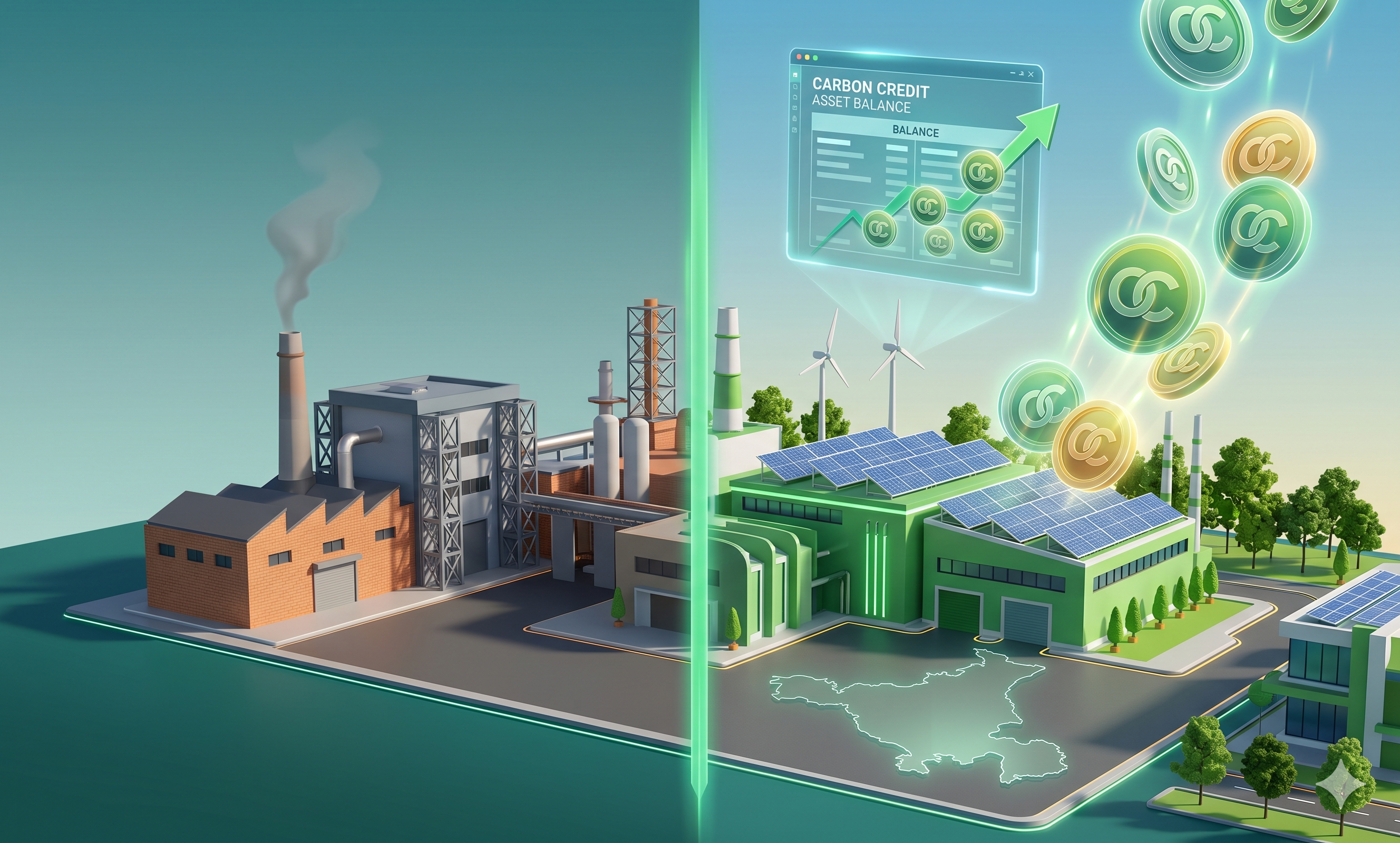
In 2026, the factory floor in industrial hubs like Faridabad, Gurugram, and Panipat is undergoing a fundamental transformation. It's not just about producing goods efficiently anymore; it's about doing so sustainably. This shift is driven by the formalization of Carbon Credit Accounting in India, and for Haryana’s industrial units, this is no longer a corporate social responsibility (CSR) exercise. It's a core financial requirement.
The recent launch of the India Carbon Market (ICM) has created a unified framework for trading carbon credits. Essentially, factories that reduce their carbon emissions below a mandated threshold can earn "Carbon Credits." Conversely, units that exceed these limits are required to purchase credits to offset their excess emissions. This puts a direct price tag on pollution and creates a quantifiable, tradable asset from sustainable practices.
The Financial Implication for Industrial Units
For a manufacturing unit in Haryana, Carbon Credit Accounting means moving beyond traditional compliance and integrating environmental metrics into the core balance sheet. The value of these credits is determined by market demand, similar to any other commodity. This presents a new revenue stream for forward-thinking industries.
For example, a textile unit in Panipat that invests in solar-powered boilers or upgrades to energy-efficient machinery doesn't just reduce its electricity bill. Under the new Carbon Credit framework, it may now receive a cash-equivalent asset on its books: a tradable Carbon Credit. These credits can then be sold on the carbon market to industries that cannot easily reduce their emissions, such as heavy steel or chemical manufacturing.
Strategic Adoption and Verification
The first critical step in leveraging Carbon Credits is precise measurement and verification. Industrial units must establish their baseline emissions. This requires robust tracking of energy consumption, fuel usage, and process emissions. The 2026 regulations require these environmental audits to be certified by Bureau of Energy Efficiency (BEE)-accredited verifiers.
Once verified, the Carbon Credits must be recorded and accounted for correctly. The ICAI’s updated "Guidance Note on Accounting for Carbon Credits" classifies these credits as current intangible assets. This creates new complexities in financial reporting, revenue recognition, and tax implications. Furthermore, the market value of these credits fluctuates, requiring careful management of this new asset class.
Beyond Credits: The "Green" Brand
The rise of Carbon Credit Accounting is not solely about monetization. It is part of a broader trend of supply chain greening. Global MNCs and large Indian corporations are increasingly scrutinized for their entire supply chain emissions (Scope 3 emissions).
An industrial unit in Faridabad that proactively manages its carbon footprint and earns verifiable Carbon Credits immediately becomes a preferred supplier. This "green certification" opens doors to higher-value contracts and reduces the risk of being phased out by large buyers seeking to achieve their own net-zero targets. Carbon Credit Accounting is rapidly evolving from an environmental mandate to a powerful strategic differentiator in the market.